At a glance
- Client
- Personal project
- Role
- Research, UX/UI, prototyping, product build
- Team
- Solo
- Timeline
- 2 weeks, May 2026
- Tools
- Claude Code, Vercel, GitHub, Supabase, Resend
- Project type
- Personal build
- 2 wks
- From idea to live MVP
- 6
- Content creators tested it
TL;DR
Ẹ̀gbẹ́ means "companion" in Yoruba. After interviewing six content creators, I designed and shipped a live MVP for solo creators and small business owners who want AI help without losing their voice. Onboarding learns their tone, audience, and platform preferences; the same group tested the product and shaped its next steps.
Problem
Solo creators and small business owners were spending hours drafting posts or rewriting AI output that didn't sound like them. Larger writing tools offered pricing, onboarding, and feature sets designed for marketing teams, not creators of one.
I built Ẹ̀gbẹ́ to close that gap: writing help that preserves a creator's voice and feels right-sized for someone managing their own social presence.
Research
I ran 30-minute interviews with six content creators, alongside casual conversations in my network. Two needs kept recurring: AI-generated content felt generic, and finding an idea was often as difficult as writing the post.
Creators also wanted tools that fit their existing workflows rather than adding more context-switching. Competitive analysis showed Jasper and Copy.ai focused on marketing teams, while ChatGPT left creators to do the prompting work themselves.
Process
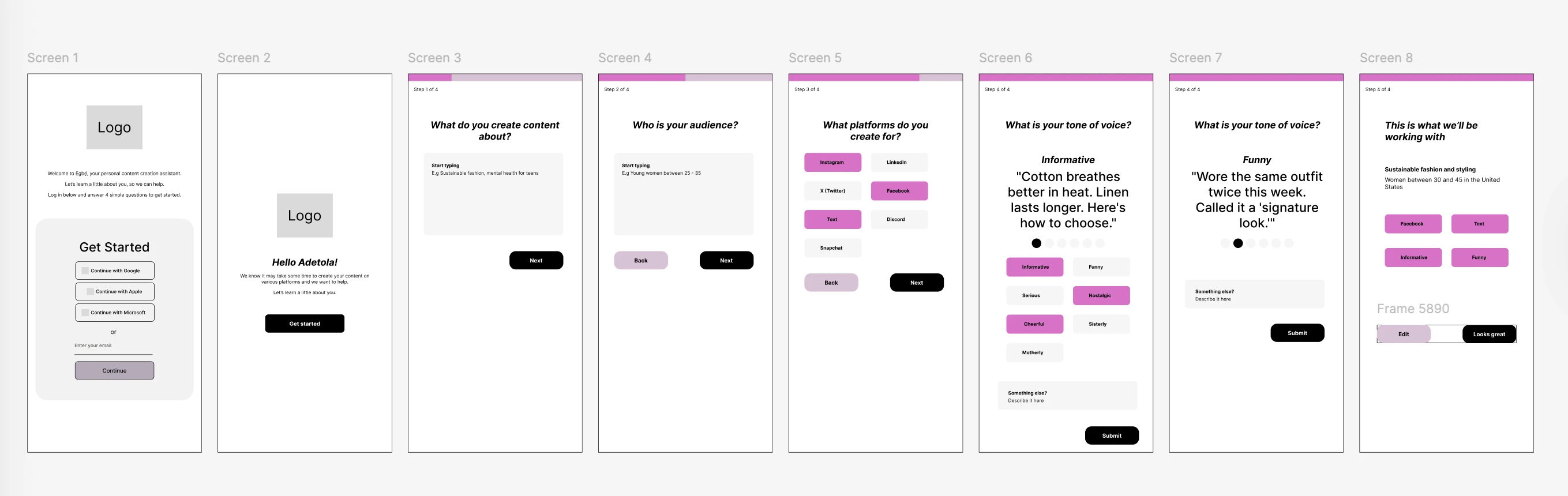
I designed wireframes and built the live product with Claude Code. Owning both design and build let me respond to constraints and UX issues directly.
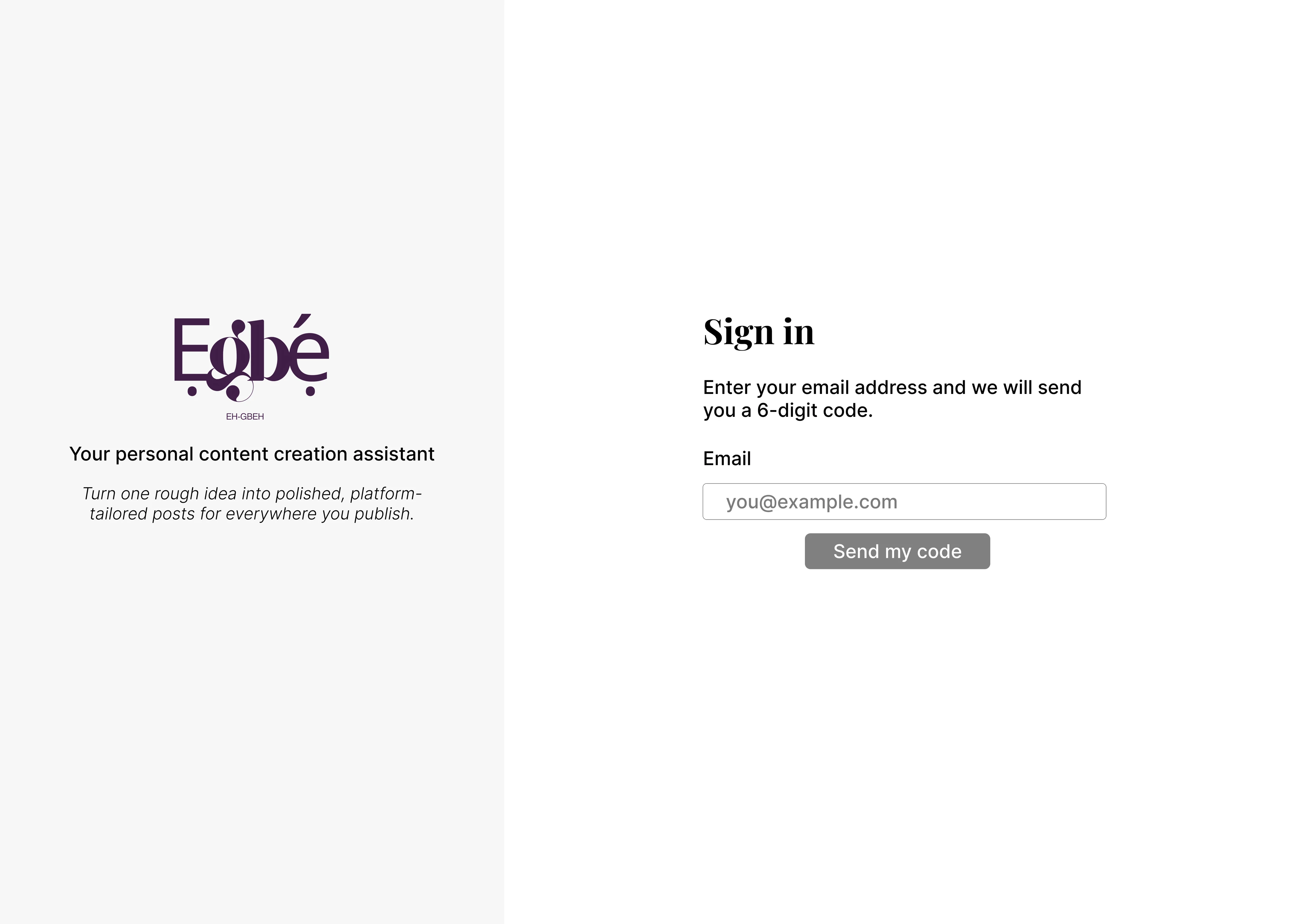
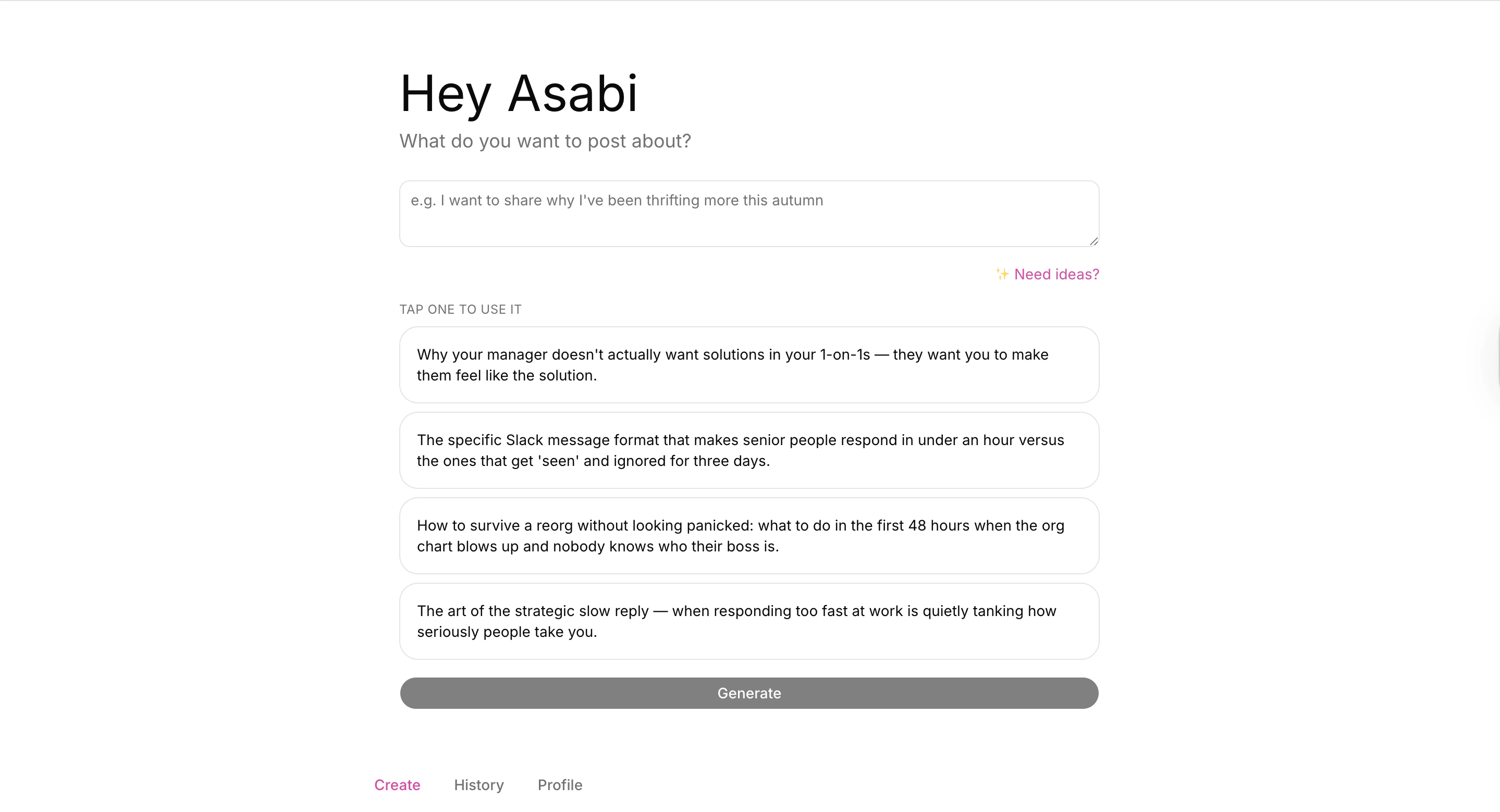
The "Need Ideas?" feature came from a tester who found the blank text box the hardest place to start. A magic-link sign-in bug also prompted a switch to email one-time codes, which testers preferred.
Once the MVP was live, I watched the same creators use it. They asked for navigation that stayed in view, control over post length, and a way to capture ideas by voice.
“The workaround became the design decision.”
Solution
Onboarding captures content interests, target audience, platform preferences, tone, and optional writing samples. This context carries into each generation instead of requiring a detailed prompt every time.
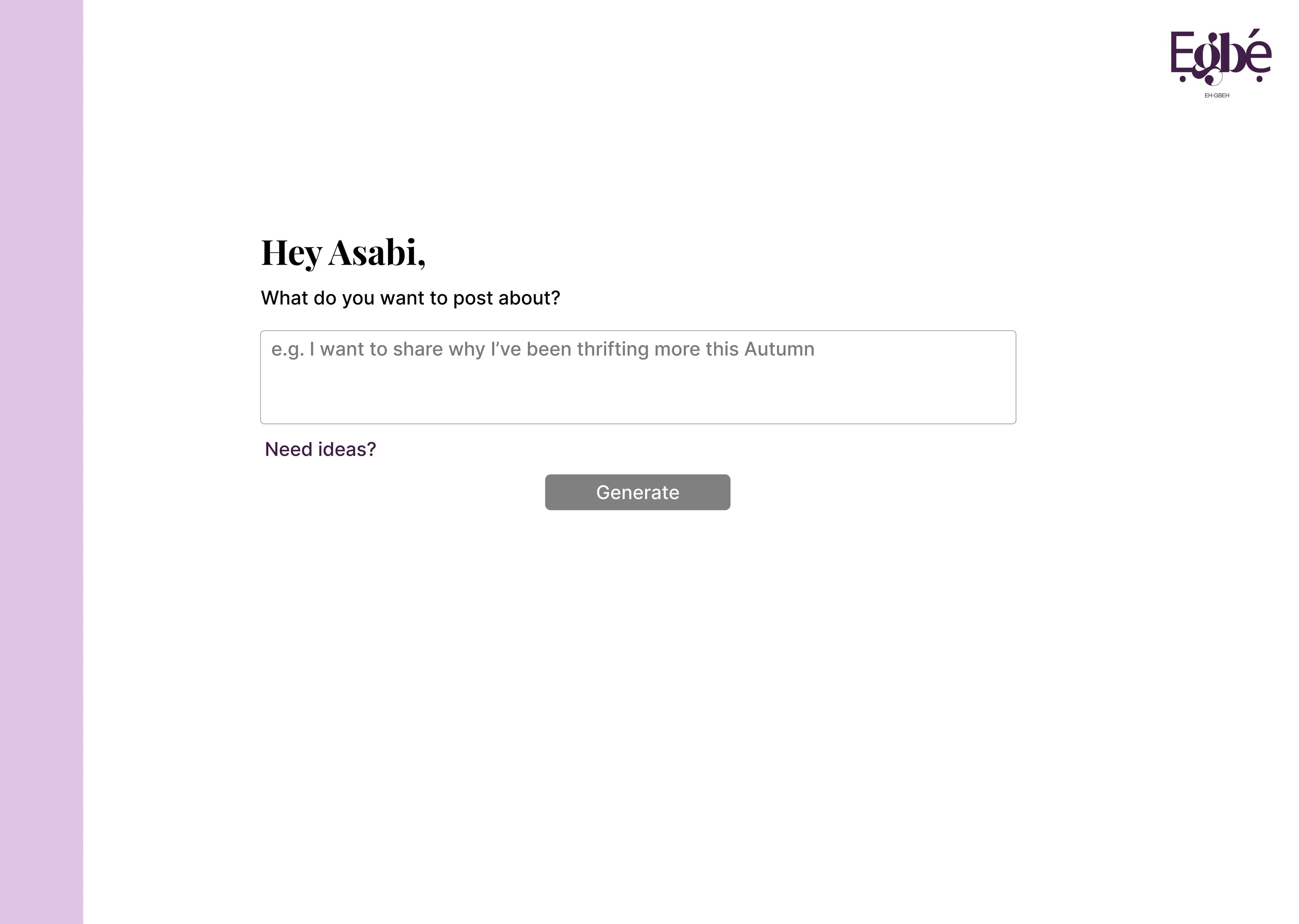
Create gives users a focused space to turn rough ideas into posts. When inspiration runs dry, "Need Ideas?" offers prompts tailored to their niche and audience.
History lets creators revisit past generations, while Profile lets them update their voice preferences.
Outcomes
The live MVP shipped in two weeks and was tested by six content creators. Feedback provided qualitative validation for the voice-matching approach, including a creator who said they would use it frequently for their posts.
The v2 roadmap includes persistent navigation, user-controlled post length, and voice input. Canva and CapCut integrations are being explored. These are next steps, not claims about features already shipped.
2 wks
From idea to live MVP
6
Content creators tested it
Reflection
Building end-to-end reinforced that the most important features aren't always in the original spec. Need Ideas, the email-code sign-in, and requests for post-length controls came from listening after the first version was in users' hands.
The name means companion in Yoruba. That is the bet behind the product: AI works best as a companion to the creator's voice, not a replacement for it.